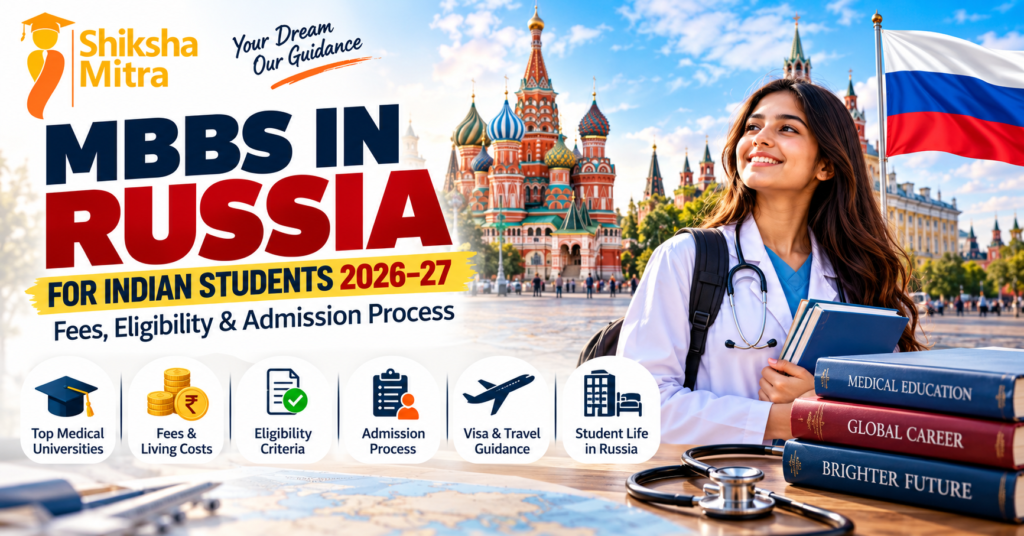
Planning to study MBBS in Russia? Russia is one of the destinations Indian students explore for medical education abroad. With universities offering General Medicine programmes, international student facilities and different tuition fee options, Russia can be worth considering for aspiring doctors.
However, choosing a university requires more than comparing admission fees. Indian students should carefully evaluate the medical curriculum, teaching language, clinical training, living expenses and eligibility for medical registration in India.
In this guide, Shiksha Mitra explains the important things you should know before applying for MBBS in Russia for the 2026–27 academic year.
Why Consider MBBS in Russia?
Russia offers several medical education options for international students. Some of the reasons students consider Russia include:
- Medical education options: Students can explore General Medicine programmes at different universities.
- English-taught programmes: Selected universities offer English-medium medical education. The teaching language must be confirmed for the complete programme, including clinical training.
- University facilities: Depending on the institution, students may have access to laboratories, teaching hospitals and student accommodation.
- International exposure: Students may interact with classmates from different countries.
- Different fee structures: Tuition and accommodation expenses vary by university and location.
Before making a decision, students should verify the university’s official admission requirements and whether its programme satisfies applicable Indian regulations.
MBBS in Russia Course Duration
Many General Medicine programmes in Russia are structured as approximately six-year courses.
However, Indian students planning to practise medicine in India must carefully check the applicable National Medical Commission (NMC) requirements.
Under the Foreign Medical Graduate Licentiate Regulations, 2021, important requirements include the prescribed minimum course duration, internship, English-medium instruction and other eligibility conditions.
Students should obtain written confirmation from the university about the complete course structure, clinical training, internship and eligibility for medical practice in the country of study.
MBBS in Russia Fees for Indian Students in 2026–27
The cost of studying MBBS in Russia depends on the university, city, course language, accommodation and other expenses.
Students should prepare a complete budget covering:
| Expense | What to Check |
|---|---|
| Tuition Fees | Annual fees and total programme fees |
| Hostel Fees | University accommodation charges |
| Food Expenses | Monthly meals and groceries |
| Visa & Documentation | Applicable processing and documentation costs |
| Travel Expenses | International flights and local transport |
| Medical Insurance | Required student insurance |
| Other Expenses | Books, registration and personal expenses |
Important: There is no single fixed MBBS fee for every Russian university. Always request an updated, official fee breakdown before paying an admission deposit.
Eligibility for MBBS in Russia for Indian Students
Eligibility requirements may vary between universities. Indian applicants should generally prepare to meet the following requirements:
1. Academic Qualification
Students should have completed Class 12 with Physics, Chemistry, Biology/Biotechnology and other required subjects, meeting the applicable academic eligibility criteria.
2. NEET Qualification
Indian students intending to pursue medical education abroad and later seek medical registration in India must satisfy the applicable NEET and NMC eligibility requirements.
3. Minimum Age
Applicants must satisfy the age requirements applicable to their admission and medical education pathway.
4. Valid Passport
Students need a valid passport and other documents required by the university and Russian visa authorities.
5. University-Specific Requirements
Some universities may require additional documents, entrance assessments, translations or medical certificates.
Tip: Check both university admission eligibility and Indian medical licensing requirements before applying.
Documents Required for MBBS Admission in Russia
Students may need the following documents:
- Class 10 and Class 12 marksheets and certificates
- Valid passport
- NEET scorecard or qualifying documents, where applicable
- Passport-size photographs
- Completed university application form
- Medical fitness certificate, if required
- Admission or invitation letter
- Visa application documents
- Translated, notarised or legalised documents, where required
The final document checklist should be confirmed with the selected university.
MBBS Admission Process in Russia: Step by Step
Step 1: Get Admission Counselling
Understand your academic eligibility, budget, university preferences and career plans.
Step 2: Shortlist Medical Universities
Compare universities based on curriculum, teaching language, fees, clinical training, accommodation and regulatory compliance.
Step 3: Submit Your Application
Prepare the required documents and submit your application according to the university’s instructions.
Step 4: Receive Admission Confirmation
If selected, review the official admission offer, fee structure and payment terms.
Step 5: Apply for a Student Visa
Complete the visa process using the required admission and supporting documents.
Step 6: Arrange Travel and Accommodation
Plan flights, hostel arrangements, insurance and pre-departure requirements.
Step 7: Complete University Registration
After arrival, complete university reporting, document verification and other enrolment formalities.
How to Choose a Medical University in Russia
Choosing a medical university is one of the most important decisions in your MBBS abroad journey.
Before finalising a university, ask these questions:
- Is the institution authorised to provide the relevant medical degree in Russia?
- Is the complete course, including clinical training, taught in English?
- Does the course duration and internship structure meet applicable NMC requirements?
- What is the total cost of education and living expenses?
- What clinical training opportunities are available?
- Does the qualification meet the requirements for medical practice in Russia?
- What accommodation and international student support facilities are available?
Remember: The National Medical Commission does not publish an endorsed list of foreign medical universities. Students must independently verify the programme’s suitability for their intended licensing pathway.
Student Life in Russia
Studying in another country requires academic and personal preparation.
Indian students should learn about the local climate, accommodation arrangements, transport, food availability, healthcare and student support services.
Although some programmes are taught in English, learning basic Russian can help students communicate in daily life and potentially during clinical interactions.
Students should also keep copies of important documents and stay informed about applicable travel, visa and safety guidance.
Can You Practise in India After Completing MBBS in Russia?
Completing a medical degree in Russia does not automatically grant permission to practise medicine in India.
Indian graduates must satisfy the applicable NMC regulations, including requirements relating to their foreign qualification, internship, eligibility and the relevant licensing or screening examination pathway.
Before enrolling, students should consult the latest official NMC rules and ensure that the university and programme meet the necessary conditions.
How Shiksha Mitra Can Help You
At Shiksha Mitra, we help aspiring medical students and their families understand the overseas admission process.
Our guidance includes:
- MBBS abroad counselling
- University selection assistance
- Admission eligibility guidance
- Documentation and application support
- Visa process guidance
- Pre-departure assistance
- Travel and post-arrival coordination support
Our goal is to help students make informed decisions about their medical education abroad.
Frequently Asked Questions About MBBS in Russia
Q1. Is Russia an option for Indian students planning MBBS abroad?
Yes. Indian students can explore medical programmes offered by Russian universities, subject to admission eligibility and applicable regulatory requirements.
Q2. Is NEET required for MBBS in Russia?
Indian students planning to obtain medical registration in India after studying abroad must meet the applicable NEET and NMC eligibility requirements.
Q3. What is the duration of MBBS in Russia?
Many General Medicine programmes are approximately six years long. Students should verify the specific programme duration and internship structure directly with the university.
Q4. Is MBBS in Russia taught in English?
Selected Russian universities offer English-taught medical programmes. Students should confirm the language of instruction throughout the full course, including clinical training.
Q5. How much does MBBS in Russia cost?
The total cost varies by university, programme, accommodation, currency exchange rates and personal expenses. Request a university-specific fee quotation before applying.
Q6. Can Indian students practise in India after completing MBBS in Russia?
They may become eligible to seek registration after fulfilling all applicable Indian medical licensing and regulatory requirements. A foreign degree alone does not guarantee registration.
Conclusion
MBBS in Russia for Indian Students 2026–27 can be an option for students exploring medical education abroad. However, university selection should always involve careful research into tuition fees, eligibility, course duration, clinical training and future licensing requirements.
With proper planning and reliable information, students and parents can make more informed decisions about their medical education journey.
Planning MBBS in Russia?
Connect with Shiksha Mitra for FREE admission counselling and university selection guidance.
Website: https://shikshamitraindia.com/
Shiksha Mitra — Your Dream, Our Guidance.
Disclaimer: University fees, admission criteria, visa requirements and medical licensing regulations may change. Students should verify the latest information directly with universities, official authorities and the National Medical Commission before applying.